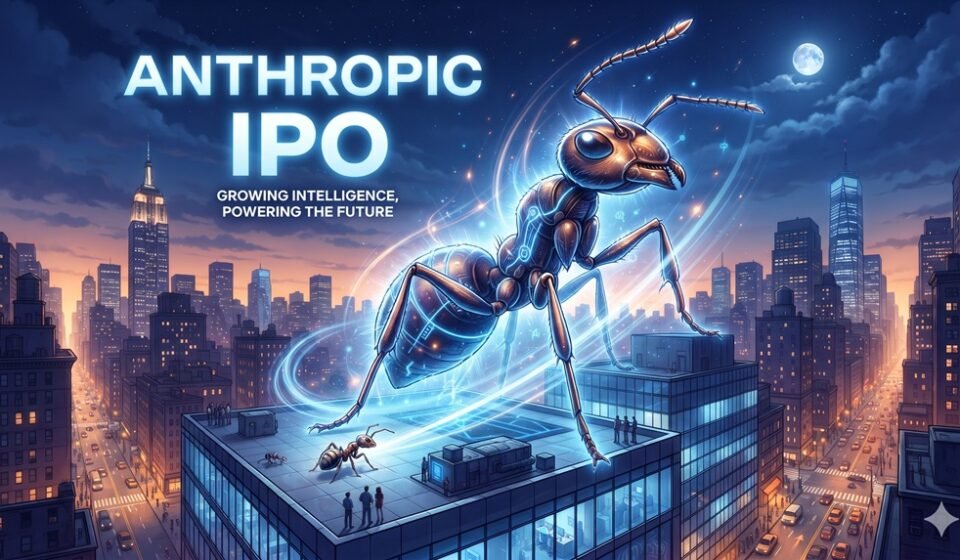

Anthropic, founded in 2021 by former OpenAI executives Dario Amodei and Daniela Amodei, has already raised billions in funding from investors including Google and Amazon, building a massive userbase for Claude. Now Anthropic, PBC has filed a registration statement on Form S-1 with the U.S. Securities and Exchange Commission for its proposed initial public offering (IPO). Anthropic will be listed on the Nasdaq under the symbol ANT.
The number of shares of Class A common stock to be offered and the price range for the proposed Anthropic IPO have not yet been determined.
What NASDAQ:ANT Would Mean for Anthropic
Going public would represent a fundamental shift in how Anthropic operates. As a private company, Anthropic has enjoyed the freedom to pursue long-term safety research without the quarterly pressure that defines life on public markets. An IPO would change that calculus significantly.
On the positive side, a public offering would unlock substantial capital, accelerating infrastructure investment, talent acquisition, and model development at a scale that even its considerable private funding hasn’t fully enabled. It would also provide liquidity for early employees and investors who have waited years for a return.
The tension, however, is real. Anthropic has built its identity around the premise that AI safety and commercial success are complementary rather than competing goals. Public shareholders, focused on earnings growth and market share, may not always share that patience. The company would need to demonstrate that its safety-first culture can survive the scrutiny and short-termism that often accompanies public ownership. How Anthropic manages that balance — and communicates it to Wall Street — will define its post-IPO identity.
Implications for the Broader AI Industry
An Anthropic IPO would send a powerful signal to the AI sector as a whole. It would represent the market’s formal endorsement of the idea that safety-focused AI development is not just ethically admirable but financially viable.
That matters enormously. For years, the prevailing assumption in venture circles was that prioritizing safety meant moving slower, which meant losing ground to more aggressive competitors. A successful Anthropic public offering would challenge that narrative and potentially reshape how investors evaluate AI companies going forward.
It would also accelerate the industry’s maturation. When major AI companies begin trading on public exchanges, they become subject to greater regulatory scrutiny, mandatory financial disclosure, and heightened accountability to a broader set of stakeholders. This transparency could benefit the industry by establishing clearer standards and pushing all players — not just Anthropic — to operate with more rigor and openness.
What It Means for Claude Users
For the millions of individuals and businesses currently using Claude, an Anthropic IPO carries both promise and uncertainty.
The promise: more capital flowing into Anthropic directly benefits product development. Users could expect accelerated improvements to Claude’s capabilities, faster API performance, expanded integrations, and potentially more competitive pricing as the company scales its infrastructure. Enterprise customers in particular might see a more robust and stable partner, one with the balance sheet and public accountability that larger organizations often require before committing to a platform.
The uncertainty: commercial pressures could gradually shift Anthropic’s product priorities. Features that drive revenue may receive more attention than those that simply make Claude safer or more trustworthy. Pricing structures could evolve in ways that disadvantage smaller users or individual developers. These are not inevitable outcomes, but they are patterns that have followed other technology companies through the IPO process.
The key watchpoint for users will be whether Anthropic’s constitutional AI approach and its commitment to responsible deployment remain central to the product roadmap, or whether they quietly become secondary to growth metrics.
How Competitors Would Respond
An Anthropic IPO would not occur in a vacuum. OpenAI, Google DeepMind, Meta AI, Mistral, and a growing roster of emerging AI labs would all feel the reverberations.
For OpenAI, already navigating its own complex transition toward a more traditional corporate structure, an Anthropic public offering would intensify pressure to clarify its own path to liquidity. Investors and employees watching Anthropic access public markets would grow impatient with ambiguity about OpenAI’s timeline.
For Google and Amazon — both significant Anthropic investors — a public Anthropic creates an interesting dynamic. Their stakes would carry real market value, but they would also find themselves more visibly competing with a company in which they hold financial interest.
For smaller AI startups, this opens the floodgates to start thinking about their own IPO plans. The Anthropic IPO would be a double-edged signal: proof that the market rewards serious AI companies, but also a reminder that the capital and credibility gap between the frontier labs and everyone else continues to widen.
The Bigger Picture
An Anthropic IPO would be more than a financial event. The world is watching how AI’s most prominent safety advocate navigates the oldest tension in business: staying true to your mission while answering to the market. How Anthropic handles that challenge will matter far beyond its own balance sheet.