


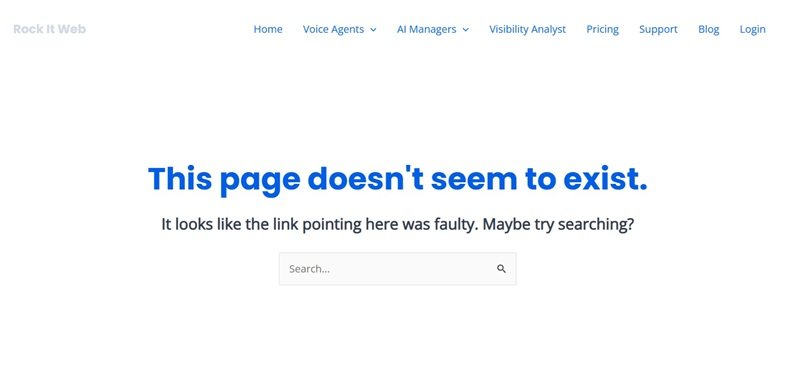
If you clicked on a link and end up on a webpage that says “404” or “page not found,” then you bumped into a broken link. Your website might be losing traffic, rankings, and credibility right now — and you may not even know it.
Broken links are one of the most common yet overlooked technical issues affecting websites of all sizes. Whether you run a personal blog, an e-commerce store, or a corporate website, broken links can quietly undermine everything you’ve worked to build online.
Which is why marketers and webmasters all over the world spend hours every month looking for and fixing broken links on their websites and blogs. But now you don’t have to – because there are AI broken links checker tools that will not only find broken links, but also automatically fix them.
What Are Broken Links?
A broken link (also called a dead link or link rot) is a hyperlink on your website that no longer leads to its intended destination. When a user or search engine crawler clicks or follows the link, instead of arriving at the expected page, they encounter an error — most commonly a 404 “Page Not Found” message.
Broken links can occur for several reasons:
- The destination page was deleted or moved without a redirect being put in place
- The URL was typed incorrectly when the link was originally added
- An external website changed its URL structure or shut down entirely
- A domain expired, making previously linked content permanently unavailable
- CMS updates or website migrations disrupted the original link structure
Both internal links (pointing to other pages on your own site) and external links (pointing to third-party websites) can break over time.
Why Broken Links Matter More Than You Think
At first glance, a broken link might seem like a minor inconvenience. In reality, the consequences can be significant across three critical areas:
User Experience: When a visitor clicks a link and hits a dead end, the experience is immediately frustrating. That frustration often translates into the user leaving your site entirely — increasing your bounce rate and reducing the chance of conversion.
Website Credibility: A website riddled with broken links signals neglect. It tells visitors — and potential customers — that the site isn’t actively maintained. This erodes trust, particularly for businesses where credibility is everything.
SEO Performance: This is where broken links can do the most measurable damage.
Why Search Engines Penalize Websites for Broken Links
Google and other major search engines like Bing and Yahoo use automated bots — called crawlers or spiders — to continuously index the web. When these bots encounter broken links on your website, it creates several problems that negatively affect your search rankings.
Crawl Budget Waste: Search engines allocate a specific crawl budget to each website. When crawlers waste that budget chasing dead-end links, important pages on your site may go unindexed or be indexed less frequently.
Disrupted Link Equity: Links carry SEO value — commonly referred to as “link juice.” Broken internal links interrupt the flow of that equity throughout your site, weakening pages that depend on it to rank competitively.
Quality Signals: Google’s algorithms are increasingly focused on page experience and site quality. A high volume of broken links is treated as a negative quality signal, which can suppress your site’s overall rankings over time.
The bottom line: Google rewards well-maintained websites and penalizes neglected ones. Broken links are a clear sign of the latter.
How to Check Your Website for Broken Links
Before you can fix broken links, you need to find them. Several methods exist for auditing your site:
- Google Search Console — GSC’s Coverage and Links reports can surface crawl errors, including broken URLs Google has encountered on your site.
- Third-party SEO tools — Platforms like Screaming Frog, Ahrefs, or SEMrush can crawl your site and generate detailed broken link reports.
- Manual checking — Practical only for very small websites; not scalable for most.
These tools are useful for identifying the problem. But finding broken links is only half the battle — fixing them efficiently is where most website owners struggle.
The Smartest Way to Fix Broken Links: Rockit Link Health Monitor
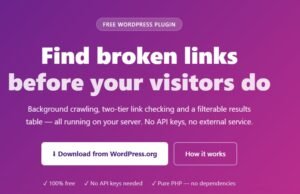 For WordPress users, the most effective and efficient solution available today is Rockit Link Health Monitor — a powerful AI-driven plugin that goes far beyond simply detecting broken links.
Unlike traditional tools that only report problems and leave the fixing to you, Rockit Link Health Monitor is built to automatically identify and repair broken links on your website. Here’s what makes it stand out:
- AI-Powered Detection: The plugin intelligently crawls your entire WordPress site, identifying broken internal and external links with accuracy and speed.
- Automatic Fixes: Where possible, the AI suggests and applies the correct replacement URLs — dramatically reducing the manual work involved.
- Ongoing Monitoring: Rockit doesn’t just run a one-time audit. It continuously monitors your site so new broken links are caught and addressed before they impact your SEO or user experience.
- Easy Integration: Designed specifically for WordPress, the plugin integrates seamlessly into your existing dashboard without requiring technical expertise.
For website owners who want to protect their SEO rankings, improve user experience, and maintain a professional online presence — without spending hours on manual link auditing — Rockit Link Health Monitor is the clear, intelligent choice.
Conclusion
Broken links are more than a minor technical nuisance. They damage user experience, hurt your credibility, and send negative signals to search engines that can suppress your rankings over time. The good news is that this is a fixable problem — and with the right tools, it doesn’t have to be a time-consuming one.
Audit your site, understand what’s broken, and let a smart solution like Rockit Link Health Monitor do the heavy lifting. Your website — and your search rankings — will be better for it.