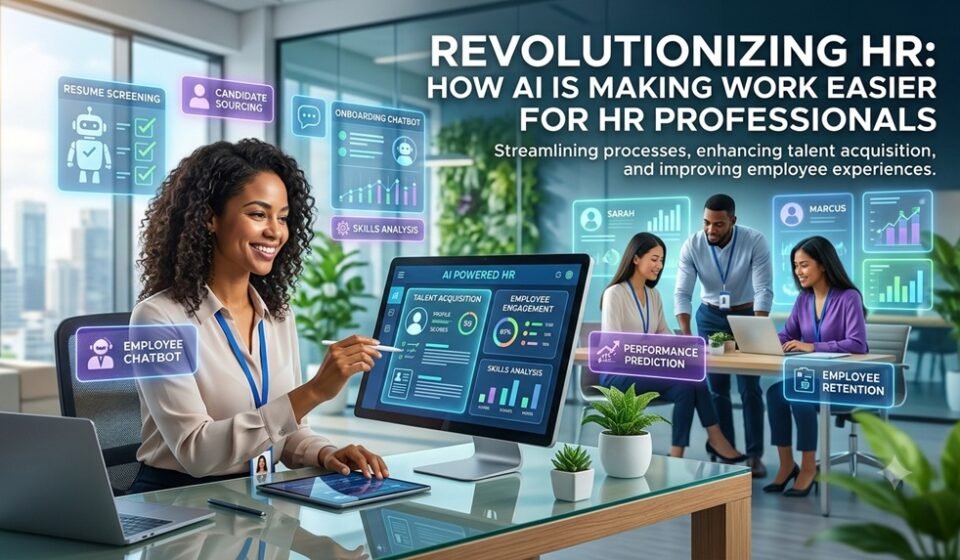

Buried beneath mountains of resumes, compliance documents, employee surveys, and benefits inquiries, HR professionals have long carried one of the most demanding administrative workloads in any organization. Artificial intelligence is changing that — not by replacing the human element that makes HR essential, but by acting as a very capable assistant that takes up all the workload.
But before you start looking at AI tools for HR, your leadership is going to ask you about the ROI – what are the benefits and cost savings? Here are ten meaningful ways AI is making work easier for HR professionals.
1. AI Powered Candidate Shortlisting and Interviews
Reviewing hundreds of resumes for a single role is one of HR’s most time-intensive tasks, followed by the first interview of shortlisted candidates to find the genuine ones. AI-powered applicant tracking systems can now scan, rank, and shortlist candidates in minutes based on skills, experience, and role requirements. This allows recruiters to focus their energy on high-potential candidates rather than spending hours on initial filtering.
2. Reducing Bias in Hiring Decisions
Unconscious bias is a persistent challenge in recruitment. AI tools can be configured to evaluate candidates on objective criteria, stripping out identifying information such as names, ages, and addresses during early screening stages. While no tool is perfect, well-designed AI systems help organizations build more equitable and consistent hiring processes.
3. Streamlining the Onboarding Experience
First impressions matter. AI-driven onboarding platforms can guide new hires through paperwork, policy acknowledgments, training schedules, and equipment requests automatically — ensuring nothing falls through the cracks. This creates a consistent, professional experience for every employee while freeing HR teams from repetitive coordination tasks.
4. Training AI Chatbots to Handle Employee Questions
A significant portion of HR’s daily workload involves answering the same questions repeatedly — about payroll, leave policies, benefits enrollment, and company procedures. AI chatbots available around the clock handle these inquiries instantly, giving employees accurate answers on demand while dramatically reducing the volume of routine requests reaching HR teams.
5. Enhancing Learning and Development Programs
AI platforms are transforming corporate training by delivering personalized learning paths based on each employee’s role, skill gaps, and career goals. Rather than offering a one-size-fits-all curriculum, these systems recommend relevant content, track progress, and adapt in real time. HR professionals can monitor development trends across the organization without manually managing individual training schedules.
6. Reducing Churn by Analyzing Survey Data and Behavorial Patterns
Turnover is expensive. AI tools now analyze patterns in employee behavior, survey responses, performance data, and even communication sentiment to identify flight risk before it becomes resignation. HR teams can intervene proactively — addressing concerns, offering growth opportunities, or adjusting workloads — based on data-driven insights rather than gut feelings or exit interviews that arrive too late.
7. Automating Payroll and Benefits Administration
Payroll errors damage employee trust and generate compliance headaches. AI-enhanced payroll systems process complex calculations, track hours, apply tax rules, and flag discrepancies automatically. Benefits administration follows a similar path, with AI tools guiding employees through enrollment decisions and ensuring accurate, timely processing without constant manual oversight from HR. This is also where AI reduces overheads significantly, in terms of payroll software licensing and usage costs.
8. Strengthening Compliance and Risk Management
Employment law is complex and constantly evolving. AI tools help HR departments stay ahead by monitoring regulatory changes, flagging potential compliance gaps, and generating documentation that meets legal standards. Whether it’s tracking mandatory training completions, managing leave entitlements, or maintaining audit-ready records, AI significantly reduces the risk of costly oversights.
9. Transforming Performance Management
Annual performance reviews are giving way to continuous, data-informed feedback cycles — and AI is a key enabler. These platforms aggregate performance data, highlight trends, and help managers deliver more consistent, objective evaluations. HR professionals gain a clearer picture of organizational performance without spending weeks manually compiling and analyzing reports.
10. Enabling Workforce Planning and Predictive Analytics
Strategic HR depends on seeing ahead. AI-powered workforce analytics help HR leaders forecast hiring needs, identify skill gaps, model the impact of organizational changes, and plan succession pipelines with far greater accuracy. Rather than reacting to workforce challenges as they emerge, HR can take a proactive seat at the leadership table armed with compelling, data-backed projections.
The Human Element Remains Central
It is worth emphasizing what AI does not do. It does not replace the judgment, empathy, and relationship-building that define exceptional HR practice. Difficult conversations, cultural leadership, conflict resolution, and genuine employee advocacy still require deeply human skills. What AI does is remove the administrative burden that often prevents HR professionals from doing that work well.
By embracing the right AI tools thoughtfully and ethically, HR teams can redirect their time and expertise toward what matters most — building workplaces where people genuinely thrive. The professionals who learn to work alongside AI will not be replaced by it. They will simply be freed to do more of the work that only they can do.