
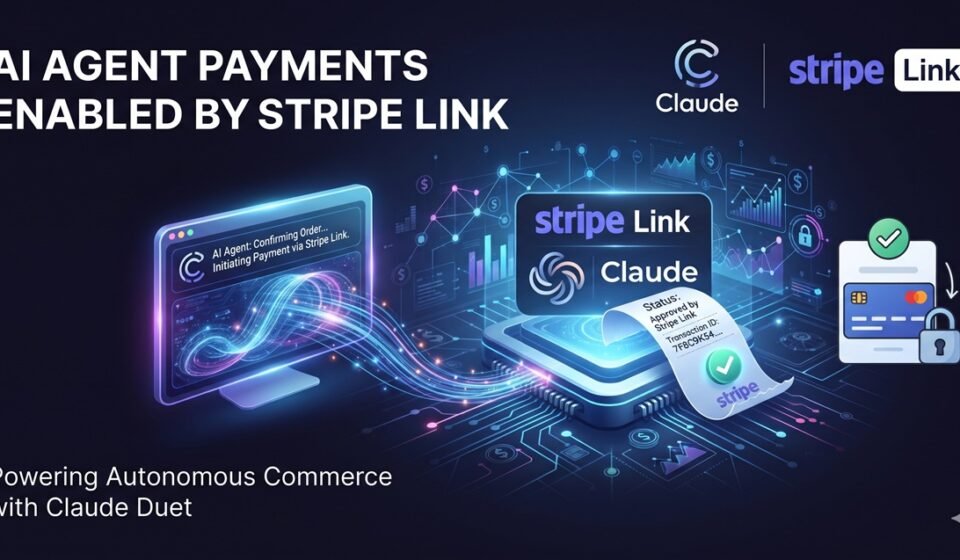

Digital payments have come a long way since Google Wallet was launched in 2011. The intersection of artificial intelligence and financial transactions just reached a pivotal new milestone. Stripe, the global payments infrastructure giant, has partnered with Anthropic to integrate Stripe Link directly into Claude. It enables Claude to autonomously complete purchases, pay for services, and handle financial transactions on behalf of users and businesses.
This isn’t science fiction. AI agents that can spend real money are here, and they’re being built by two of the most respected names in their respective industries. But with that power comes a critical question: how safe is it, and what should users and businesses know before enabling it?
What Is the Stripe Link and Anthropic Partnership?
Stripe Link is Stripe’s one-click checkout network, which saves and autofills payment information across millions of merchants. By integrating Link’s wallet for agents and Stripe MCP into Claude Duet, AI agents can now access stored payment credentials and execute transactions without human approval at each step.
Claude Duet is the practical expression of this partnership — an AI mode where Claude acts as an active participant in your financial life rather than a passive advisor. It can book travel, purchase software subscriptions, pay invoices, order supplies, and handle routine financial tasks based on instructions you provide.
“Business owners are asking agents to take on more of their work. They want to say ‘order these supplies’ or ‘send this customer an invoice’ and know the agent can follow through,” said Kevin Miller, head of payments at Stripe. “With Link’s wallet for agents and Stripe MCP, Claude Duet can do more of that everyday work while keeping business owners in control.”
“As agents start doing real work for people, trust matters even more when money changes hands,” said Rahul Patil, Chief Technology Officer at Anthropic. “Stripe has spent years earning that trust from businesses of every size. Building Claude Duet’s purchases on Link keeps people in charge of every dollar, and that’s the foundation an agent needs before anyone hands it real responsibility.”
Key Features of Claude Duet with Stripe Link
Autonomous Transaction Execution
Claude can complete end-to-end purchases using your saved Stripe Link payment details, eliminating the need to manually confirm each checkout step.
Multi-Merchant Compatibility
Because Stripe powers payments for millions of businesses globally, Claude’s payment capabilities extend across a massive ecosystem of vendors and service providers.
Spending Controls and Guardrails
Users can set predefined spending limits, restrict purchases to specific categories, and require confirmation for transactions above a defined threshold.
Audit Trails and Receipts
Every transaction executed by Claude is logged, providing full transparency into what was purchased, when, and for how much.
Business and Personal Modes
The integration supports both individual consumer use cases and enterprise workflows, including vendor payments, software procurement, and team expense management.
The Pros: Why This Is a Significant Step Forward
Massive Time Savings
Delegating routine purchases to an AI agent frees up hours each week for both individuals and teams. Subscription renewals, supply reorders, and vendor payments can run on autopilot.
Reduced Human Error
AI agents don’t forget to renew a critical software license or accidentally pay the wrong invoice amount when properly configured.
Seamless Integration
Stripe’s existing infrastructure means businesses don’t need to overhaul their payment systems. If you already use Stripe, Claude Duet plugs into what you have.
Backed by Trusted Institutions
Both Stripe and Anthropic have strong reputations for security and responsible development, which provides a meaningful baseline of trust.
The Cons: Real Risks to Consider
Loss of Granular Control
Any system where an AI can spend money independently introduces the risk of unintended purchases. Misconfigured instructions or misunderstood context could lead to incorrect transactions.
Security Vulnerabilities
Storing payment credentials accessible to an AI agent creates a new attack surface. Prompt injection attacks — where malicious content tricks the AI into taking harmful actions — are a known concern in agentic AI systems.
Fraud and Liability Ambiguity
If an AI agent makes an unauthorized or erroneous purchase, the question of who is liable — the user, Anthropic, or Stripe — remains legally unsettled territory.
Over-Reliance Risk
Automating financial decisions can erode the human oversight that catches anomalies, vendor errors, or billing discrepancies before they compound.
How Safe Is It, Really?
The honest answer is: reasonably safe with proper configuration, but not without meaningful risk. Stripe’s fraud detection and Link’s security architecture are industry-leading. Anthropic has invested heavily in Constitutional AI and safety-focused model training. However, no system is bulletproof.
The safety of Claude Duet ultimately depends on how carefully users and businesses configure their guardrails. Treating it like a corporate credit card issued to a new employee — with limits, categories, and review processes — is the right mental model.
Frequently Asked Questions
Q: Should I give Claude access to my primary bank account or credit card?
Q: What spending limits should I set?
Q: How do I prevent unauthorized purchases?
Q: Can businesses safely use Claude Duet for procurement?
Q: What happens if Claude makes a mistake?
Q: How do I audit what Claude has spent?