
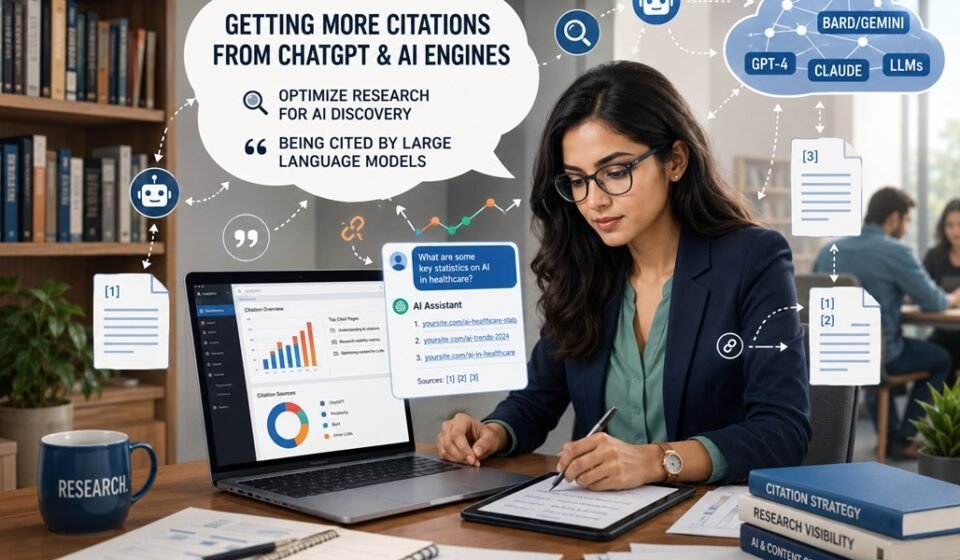

As AI-powered tools like ChatGPT, Perplexity, and Google’s AI Overviews become primary research destinations for millions of users, a new priority has emerged for content creators and marketers: optimizing for AI citation. Getting your content referenced by these tools is quickly becoming as valuable as ranking on page one of a traditional search engine. But what actually influences whether an AI system surfaces your content? The answer, in large part, comes down to format.
Why Format Matters to AI Systems
AI language models and retrieval-based tools are trained on and retrieve content based on clarity, structure, and authority signals. Unlike human readers who can navigate ambiguity and visual design, AI systems prioritize content that is logically organized, factually dense, and easy to parse. A beautifully designed infographic may delight a human visitor, but an AI tool reads the underlying text — and if that text lacks structure, the content becomes invisible.
Understanding this distinction is the first step toward creating content that AI tools will confidently cite.
The Formats That Perform Best
Long-Form, Structured Articles
Comprehensive, well-organized articles remain the gold standard for AI citation. Content that covers a topic thoroughly — addressing the what, why, how, and nuances of a subject — gives AI tools enough context to extract meaningful, accurate answers. The key structural elements that matter most include:
- Clear H2 and H3 headings that mirror the way users phrase questions
- Concise introductory paragraphs under each section that summarize the key point immediately
- Bulleted or numbered lists that break down steps, options, or comparisons
- Defined terms and concepts explained in plain language
Articles structured this way are easier for AI retrieval systems to chunk and index, making specific passages more likely to be pulled as cited references.
Original Research and Data Reports
AI tools actively seek authoritative, factual sources. Original research, surveys, proprietary data, and industry reports carry significant weight because they offer information that cannot be found elsewhere. When your organization publishes a study with specific statistics, percentages, or findings, those data points become highly citable — both by AI tools and by other publishers referencing those tools.
Even modest original research, such as a survey of a few hundred industry professionals, can generate recurring citations if the findings are genuinely useful and clearly presented.
Definitive Guides and Pillar Pages
Long-form pillar content — the kind of comprehensive guide that attempts to be the single best resource on a topic — signals to AI systems that your page is an authority. These guides work well because they naturally include the structural variety AI tools favor: introductions, sectioned explanations, examples, comparisons, and summaries.
The word count matters less than the depth. A focused 1,500-word guide that answers a question completely will outperform a padded 4,000-word piece that circles the same points repeatedly.
Formats That Underperform
Certain content types, despite their value to human audiences, tend to be cited less frequently by AI tools:
- Heavily visual content such as infographics, slideshows, or video-first pages with minimal text
- Opinion pieces without supporting evidence, which AI tools may deprioritize in favor of verifiable facts
- Thin content under 300 words that lacks the contextual depth needed for confident citation
- Paywalled or access-restricted content that AI crawlers cannot fully index
This does not mean abandoning these formats — it means ensuring that any visual or gated content is accompanied by substantial, publicly accessible text.
Additional Factors That Influence AI Citation
Format alone does not guarantee citation. Several supporting factors matter significantly:
Source credibility: Content published on established domains with strong backlink profiles is more likely to be treated as authoritative. Building domain authority through traditional SEO practices remains relevant.
Freshness: AI tools, particularly retrieval-augmented systems like Perplexity, prioritize recent content. Keeping articles updated with current data and publication dates improves citation potential.
Schema markup: Structured data markup, especially FAQ schema and HowTo schema, helps AI systems understand your content’s purpose and structure.
Clarity of authorship: Bylined articles with clear author credentials signal expertise and trustworthiness — factors that align with both Google’s E-E-A-T guidelines and AI citation preferences.
Summary
Getting cited by ChatGPT and other AI tools is not a mystery — it follows a logical set of preferences rooted in clarity, structure, and authority. Prioritize long-form structured articles, Q&A pages, and original research. Ensure your content answers questions directly and is organized so that key passages stand on their own. As AI becomes a dominant information gateway, content optimized for machine readability and human usefulness will consistently win the citation race.
The writers and organizations who adapt now will have a meaningful competitive advantage as AI-driven discovery continues to reshape how audiences find and trust information.