
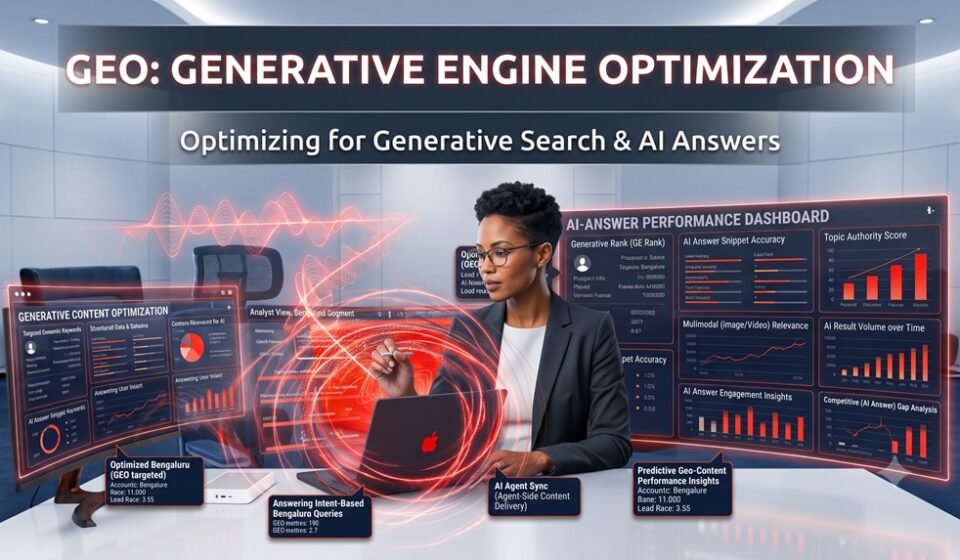

Introduction to Generative Engine Optimization
Generative Engine Optimization (GEO) is the practice of optimizing digital content so it appears prominently in AI-generated responses from tools like ChatGPT, Google's AI Overviews, Perplexity, and Microsoft Copilot. Unlike traditional SEO, which targets search engine rankings, GEO focuses on making your content the trusted source that AI systems cite, summarize, or reference when answering user queries.
In short: GEO helps your content get chosen by AI, not just ranked by algorithms.
As AI-powered search continues to reshape how people find information, brands and content creators who understand GEO gain a significant competitive advantage. A 2023 study from Princeton, Georgia Tech, and The Allen Institute for AI found that GEO strategies can increase content visibility in AI-generated responses by up to 40%.
Key Concepts of Generative Engine Optimization
Understanding GEO requires familiarity with a few foundational ideas that distinguish it from conventional SEO.
Authority and Trustworthiness
AI engines prioritize content from sources they deem credible. This means demonstrating expertise through accurate data, citing reputable references, and maintaining a consistent, authoritative voice across your content.
Semantic Relevance
Generative AI models understand context and meaning, not just keywords. Content must comprehensively address a topic, answering related questions and covering subtopics that signal depth of knowledge.
Structured and Scannable Content
AI systems extract and synthesize information efficiently. Content organized with clear headings, bullet points, numbered lists, and concise definitions is far easier for AI to parse and cite accurately.
Direct, Answer-First Formatting
GEO-optimized content leads with the answer. AI tools are designed to respond to questions immediately — content that mirrors this format is more likely to be pulled into generated responses.
Brand Mentions and Citations
The more your brand, product, or content is referenced across the web — in reviews, articles, forums, and reputable publications — the more likely AI systems are to recognize and surface your content as a reliable source.
Step-by-Step Guide to Implementing GEO
Step 1: Identify the Questions Your Audience Is Asking
Use tools like AnswerThePublic, Google's "People Also Ask," and Reddit forums to find the exact conversational queries your audience types — or speaks — into AI tools. Focus on long-tail, question-based phrases.
Step 2: Structure Content Around Direct Answers
Open every key section with a clear, concise answer to the question being addressed. Follow it with supporting detail, examples, and data. Think of this as the "answer first, explain second" approach.
Step 3: Use Clear Headings and Structured Formatting
Break your content into logical sections using H2 and H3 tags. Use bullet points and numbered lists wherever applicable. This structure helps AI engines locate and extract relevant information quickly.
Step 4: Build Authority Through Statistics and Citations
Incorporate verified data, expert quotes, and links to high-authority sources. AI systems are trained to favor factual, well-sourced content. When you reference credible data, you increase the likelihood of being included in AI-generated answers.
Step 5: Optimize for Conversational and Voice Search Language
Write the way people speak. Phrases like "How does GEO work?" or "What is the difference between SEO and GEO?" mirror natural language queries. Answering these in plain, direct language improves your content's compatibility with voice-driven AI assistants.
Step 6: Build Your Off-Page Presence
Encourage mentions and backlinks from reputable sources. Get reviewed on industry platforms, contribute to forums like Reddit and Quora, and pursue guest posting opportunities. Broad digital footprints signal to AI that your brand is recognized and trusted.
Step 7: Monitor AI Visibility Regularly
Test how AI tools respond to queries relevant to your content. Search for your target questions in ChatGPT, Perplexity, and Google AI Overviews. Note whether your content is cited or summarized — and adjust accordingly.
Conclusion
Generative Engine Optimization represents the next frontier in digital visibility. As AI tools become the default starting point for millions of users, the brands that understand how to speak AI's language will earn the exposure that others will miss. By creating authoritative, clearly structured, question-driven content, you position your brand not just to rank — but to be the answer.
Start applying GEO principles today, and your content won't just compete in search. It will lead the conversation.
Frequently Asked Questions
What is the difference between SEO and GEO?
Does GEO replace SEO?
How long does GEO take to show results?
Do I need technical skills to implement GEO?
—